
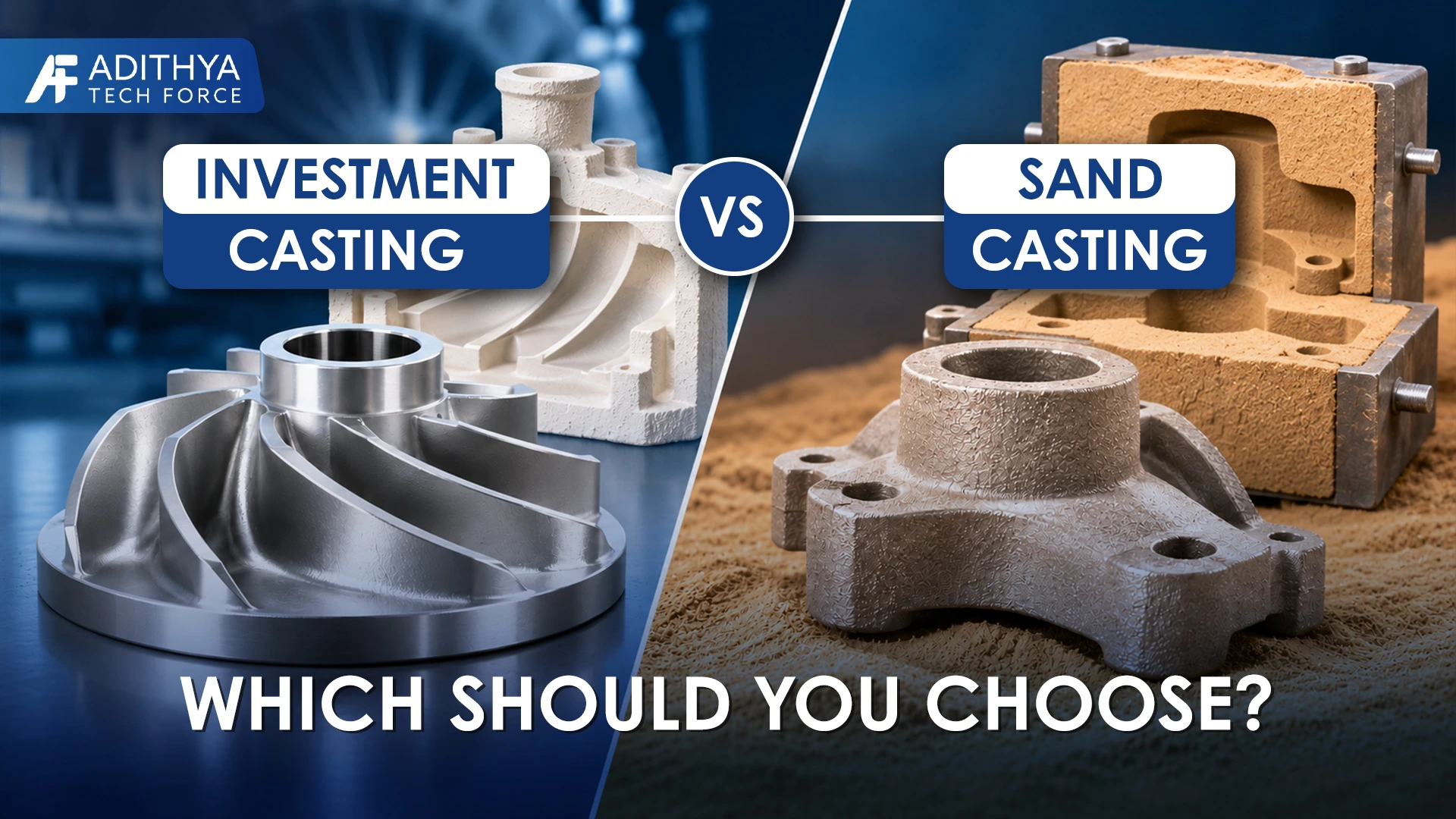
- Pick the investment casting process for small, intricate parts that need a clean finish and little machining.
- Pick the sand casting process for heavy parts, lower volumes, or a tight tooling budget.
- Four things decide it: part size, finish and tolerance, volume, and lead time.
- The catch is where the money goes. Investment casting costs more in tooling, and sand casting often costs more in machining.
- Not sure? Send the drawing to a foundry that runs both and compare the finished cost.
Investment Casting vs Sand Casting: How to Decide
You have a drawing, a deadline, and two quotes that don’t match. One foundry is cheaper on tooling. The other says its surface finish will save you machining. Both can be right.
The most expensive casting defect is picking the wrong process, and no inspection report will flag it until the machining bill arrives. Four questions about your part usually settle it.
CHECK OUR RANGE – Investment Casting Services | Steel Sand Casting Services
Investment Casting vs Sand Casting at a Glance
| Factor | Investment Casting | Sand Casting |
| Part size | A few grams to 150 kg, with 1 to 30 kg handled most efficiently here | A few grams to 3,000 kg |
| Surface finish | Smooth, little machining needed | Rougher, needs fettling and machining |
| Shape and tolerance | Tighter tolerances, intricate details | Simpler shapes, looser tolerances |
| Tooling cost | Higher upfront | Lower |
| Lead time | Longer, many steps | Shorter |
| Best for | Small, complex parts at steady volumes | Heavy parts, low volumes, early development |
How the Sand Casting Process Works
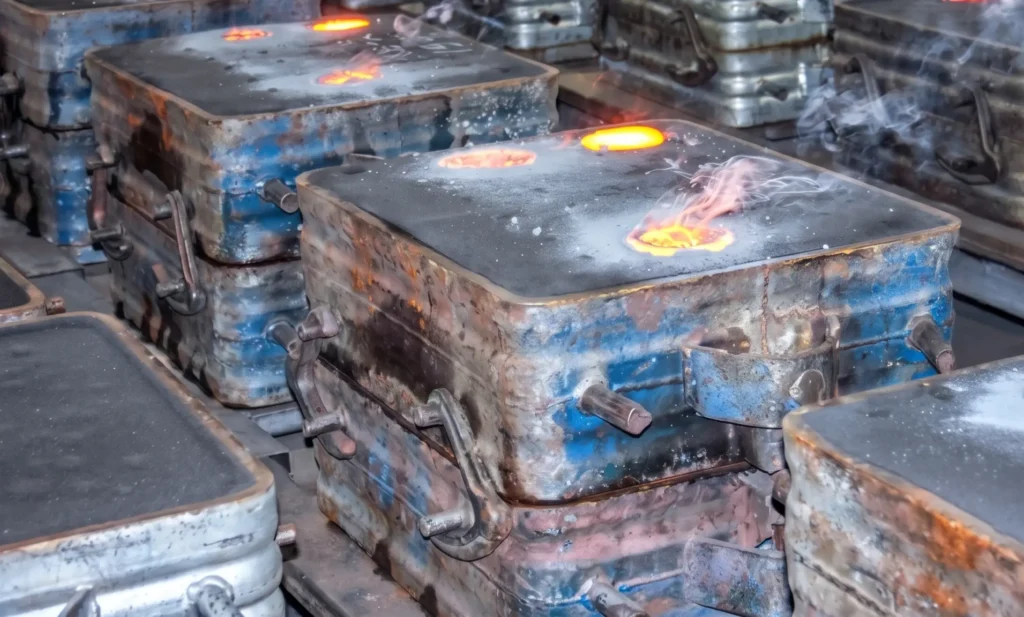
A pattern of the part is used to make a mould in sand. Metal is poured in, the sand is shaken off, and the casting goes on to fettling, heat treatment, and machining.
At Adithya Tech Force, patterns are made in teakwood and aluminium, with 6,500 active patterns handled through CNC. Moulding uses sodium silicate/CO2, resin-bonded no-bake, or the shell process. Single pieces go up to 3,000 kg, with a capacity of 400 tons a month.
How the Investment Casting Process Works
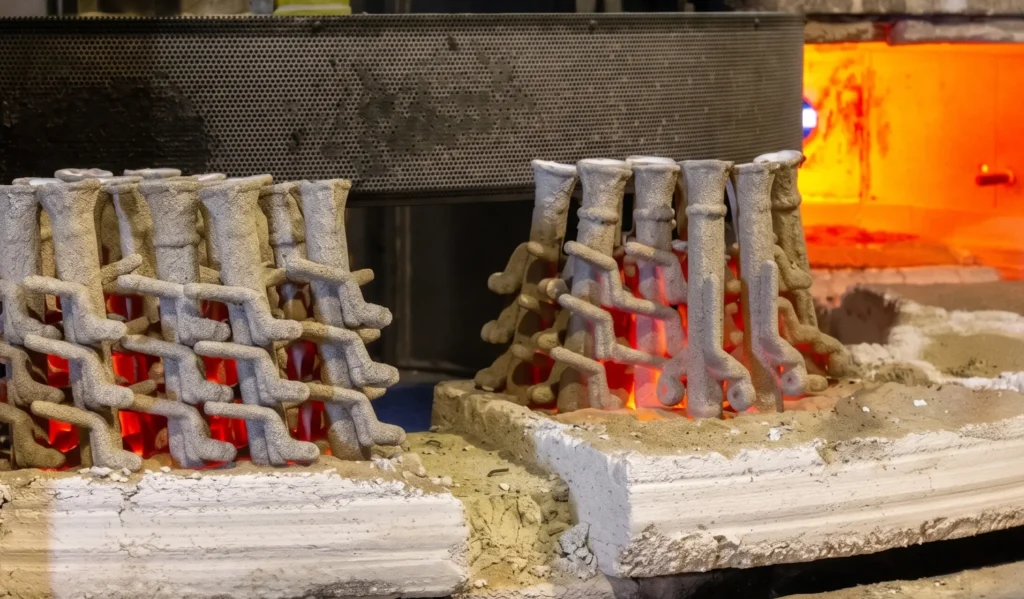
A wax copy of the part is dipped in ceramic slurry and sand until a shell builds up. The wax is melted out in an autoclave, and metal is poured into the hollow shell. After that, the shell is broken away, and the part is finished. Our step-by-step guide to investment casting covers each stage.
Here, the shell room uses air conditioning and dehumidifiers, with robotic coating for stronger shells. Installed capacity is 50 tons a month.
Part Size
Weight is the quickest filter. If your part is a few hundred kilos, sand casting is the realistic route. If it is small and detailed, investment casting is worth a look.
Finish and Tolerance
Investment castings come out close to the final shape with a smooth surface, so less machining follows. Sand castings leave more material for machining, which is fine when the surfaces don’t need to be exact.
Cost and Volume
Investment casting tooling costs more, and it pays back when the machining is saved, and the repeat volume adds up. Sand casting patterns cost less, so it suits low volumes and one-offs. Compare the finished part cost, not just the casting price.
See Both Processes in Coimbatore Before You Decide
Pumps, valves and engineering shops make Coimbatore a natural home for both routes. A sand casting foundry in Coimbatore is easy to visit, so go and look at the pattern shop and moulding area, then ask to see the wax and shell rooms for investment work.
Final Thoughts
There is no universal winner. Investment casting earns its higher tooling cost on small, intricate parts that need a clean finish. Sand casting earns its place on heavy, simpler parts and lower volumes.
If your part doesn’t point clearly to one, ask for quotes on both and compare the final cost, with machining and rework included.
Adithya Tech Force is an investment casting foundry in India that also runs steel sand casting from Coimbatore. Send us your drawing, and we will tell you which route suits it.
Frequently Asked Questions (FAQs)
- Is investment casting always more expensive than sand casting?
Tooling costs more, but the finished cost depends on how much machining the better finish saves. Ask for quotes on both. - Can sand casting make very large parts?
Yes. Here, sand casting goes up to 3,000 kg, while investment casting is limited to about 150 kg, with 1 to 30 kg being the most efficient. - What should I send for a comparison quote?
Your drawing, the material, the quantity, and the tolerance and surface finish you need.