

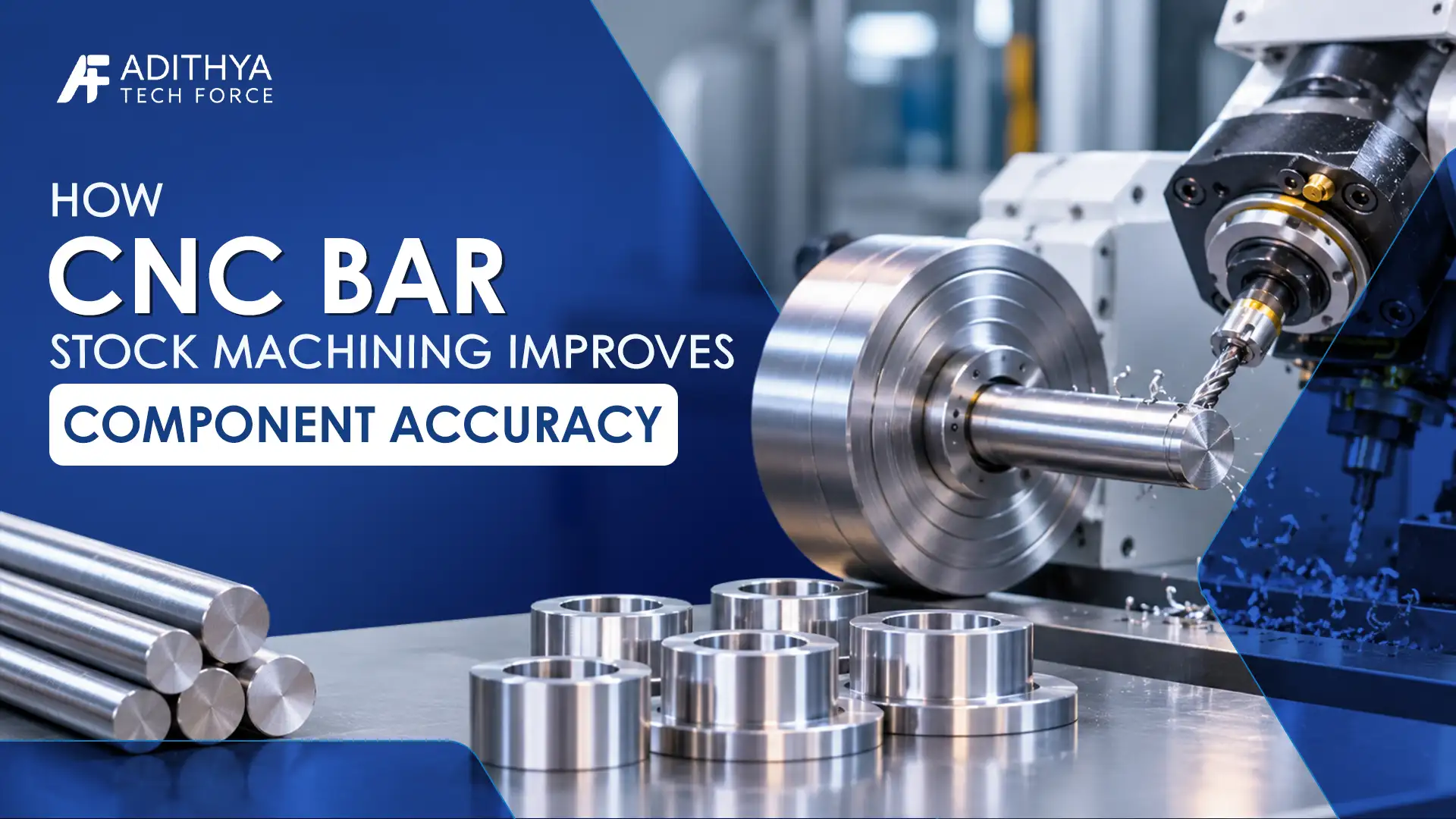
- CNC bar stock machining improves accuracy by cutting each part from one consistent bar in as few setups as possible.
- Fewer re-clamps mean fewer errors stacking up.
- Swiss-type turning keeps long, thin parts straight.
- CMM reports prove the result, lot by lot.
- Ask any precision CNC machining shop for a material certificate and a CMM report.
How CNC Bar Stock Machining Holds Tolerance
Imagine 2,000 shafts on order. The first 200 are perfect. Then the diameters start to drift, and your assembly line begins rejecting parts. Nothing dramatic happened. Small errors just piled up between setups, one clamp at a time.
Bar stock machining is built to stop that pile-up. The part starts as a solid bar, and the machine turns, drills and mills it in one continuous cycle.
CHECK OUR RANGE – Precision CNC Machining and Fabrication
Where Accuracy Is Lost and How Bar Stock Machining Fixes It
| Problem | What Goes Wrong | How Bar Stock Helps |
| Many setups | Re-clamping adds error | Turn, drill and mill in one setup |
| Uneven raw material | Cuts and finish vary | Bar has consistent size and structure |
| Long, thin parts | Part flexes away from the tool | Swiss-type support at the cut |
| Size changes mid-run | Tool wear and handling creep in | Same program, same cycle |
| No proof | Faults found late | CMM report with each lot |
The Bar Itself
Everything starts here. When the bar changes size or bend, the product will change size and bend, and no machine can fix that. The good machine can’t save the bad bar; the good cook can’t save the bad rice. Request a certificate of materials before the 1st cut is made.
Setups and Tolerance
When a part is unclamped and then clamped again, it moves slightly. Repeat this 4 times and the features won’t be aligned as in the drawing. That’s where bar stock gets its keep; with the whole part made in one setting, all of its features are measured from the same point.
Long, Thin Parts
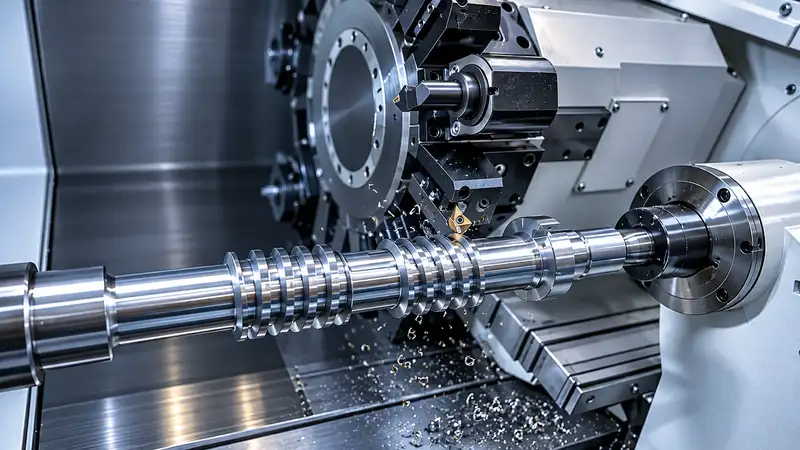
A long, thin part bends when contacted, causing the cut to wander. Swiss-type turning is a process in which the bar is guided through a guide bushing and the tool is used very close to the guide bushing. The part has virtually no flexibility for bending.
Checking the Result
Accuracy only counts if somebody measures it. Adithya Tech Force runs 120+ CNC machines, including multi-axis milling, CNC lathes, and Swiss CNC turning. Parts are checked on programmable CMMs and optical comparators, with paperless inspection and a real-time ERP system behind it.
ALSO CHECK – High-Precision CNC Machining & Fabrication for Aerospace
Five Questions to Ask Before You Place an Order
When you compare bar stock machining India suppliers, these five questions separate the careful ones from the rest:
- Is my part machined in one setup, and on which machine?
- Can I see the material certificate for the bar?
- Will you share a CMM report with the first lot?
- How do you check for drift during a long run?
- Would this part be cheaper to cast first and machine after?
That last question matters. For large, hollow, or complex shapes, a casting with light machining can waste less material.
Final Thoughts
Accuracy in machining is mostly about taking sources of error out of the process, one by one.
So how does CNC bar stock machining improve accuracy? It starts with a consistent bar, finishes the part in a few setups, supports slender parts, and measures the result. Ask any shop to show you each of these, and the answers will tell you a lot.
Adithya Tech Force offers precision CNC machining from Coimbatore. If you are looking for bar stock machining India has to offer, send us your drawing and we will review it with you.
Frequently Asked Questions (FAQs)
- Which parts suit CNC bar stock machining?
Round or near-round parts like shafts, pins, bushings, and fittings, made in repeat volumes. Hex and square bars work too. - Which materials can be bar stock machined?
Most machinable metals are available as bars, including steel, stainless steel, aluminium, copper, and specialty alloys. - How can I check that parts will hold tolerance?
Ask for a CMM inspection report, the bar’s material certificate, and a first sample. Also ask how many setups the part needs.